Motivations, Highlights & Challenges – part 1
Motivations, Highlights & Challenges – part 1
by Digby Hartridge
It’s been suggested I write a few words about how I came to write my biography of Sir John Willoughby, 5th Bart, and here they are. I worked part-time after early retirement and, like so many, started to systematically flesh out the family history. My mother had always kept in touch with friends and relations and she furnished me with a fund of stories and more or less connected bits of family tree. I’d been an archivist and an oral historian in my twenties and grew to enjoy the company of elderly folk, and I’d learnt to prepare for interviews and to check and doublecheck everything. And now that I was a pensioner myself…
I’ve always made notes on lectures or significant books and kept intermittent diaries. Writing helps me concentrate, restrains my fluttering mind. And it makes me understand, requires me to be specific; it reveals gaps in an argument, raises questions to be asked. Now I was studying again, borrowing and buying books, cut-and-pasting from the internet. The dates and the connections weren’t enough, of course, and so I collected life stories. As my grandparents had emigrated to Southern Rhodesia (my birthplace), I refined my already sound knowledge of, not just events in that country and the Scramble for Africa, but the international background. And then the biographies of the individual players. In no time I accumulated enough for a book on my father’s antecedents, and another on my mother’s.
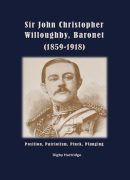
One connection of my paternal grandfather’s warranted a whole chapter, and the more I probed the more I realised what a full life he’d led and the more I read the more I realised how inadequate and contradictory the sources were. I write as an archivist preserving the sources and clarifying context, and certainly not as an historian with an axe to grind in the woefully polarised arena of Empire. I thought: he warrants a wee monograph all of his own. Why did he think the Jameson Raid, that disastrous turning point in Empire, could possibly succeed? And “context” became my refrain. And fatally I came to like Johnny, even admire some aspects of his character, though each strength was matched by a glaring fault. His baronetcy fell vacant; he had no descendants to beat his drum. I felt he deserved a memorial.
My wee monograph was a hefty book. And revising it required rewriting. Oh dear, all that work… I didn’t want my research to be wasted. It was the Time of Covid and senior citizens panicked a little, and this particular one, in isolation and with a lot of time on his hands, decided to self-publish his glittering prose. And just when he thought the saga was over and moved on to a novel about motor racing in the late 1940s, as one does, a niche publisher picked up my tribute to Sir John and gave it just what it needed, a fresh look and a tidying up.
One thing not tidied up: I wasn’t thinking of the 21st century when kept early 20th century spellings of place and tribal names and the names of battles: it harmonised with quotations but may give the wrong impression to understandably delicate sensibilities, and makes it too easy to characterise me as behind-the-times.